
Menu
The Social Science Lens (SSL) journal is grounded in the conviction that Philippine society is best understood through its own legal, cultural, and institutional frameworks. The Civil Code of the Philippines (Republic Act No. 386) provides the foundation for examining social institutions and interpersonal relations, while the Local Government Code of 1991 (Republic Act No. 7160) highlights the dynamics of decentralization and participatory governance. Equally significant, the National Commission for Culture and the Arts (NCCA), created in 1992 under Republic Act No. 7356, affirms culture as a cornerstone of nation‑building, underscoring the relevance of sociology, anthropology, and political science in shaping collective identity. Together, these laws anchor the journal’s mission to advance scholarship that is both nationally rooted and internationally engaged.
Social Science Lens (SSL), a trimestral peer‑reviewed, open access journal, publishes research that interrogates the intersections of culture, governance, and social institutions, situating Filipino scholarship within broader theoretical and methodological debates. Its scope encompasses studies of community practices, evolving social structures, and policy frameworks that respond to contemporary challenges. To capture these diverse perspectives, SSL accepts original research articles, systematic, scientometric, and literature reviews, short reviews, conceptual views, policy briefs, and case studies. This methodological breadth ensures that the journal serves as a venue for empirical investigations, theoretical reflections, and applied policy discussions. By fostering dialogue among researchers, educators, and policymakers, SSL contributes to the academic community by advancing knowledge, refining practice, and informing governance and cultural development. Its readership includes scholars, practitioners, and decision‑makers who seek rigorous yet accessible scholarship that bridges local realities with global debates. While the journal opens contributions from neighboring countries as it was earlier developed to be a global platform, its primary commitment shifts to foreground Philippine contexts, whether in local governments or cultural communities, as vital sites of global inquiry. These ideals position SSL as a platform for contextually grounded scholarship that resonates both locally and internationally, illuminating how social science can inform interventions, enrich discourse, and contribute to equitable and transformative development.
The journal’s scope encompasses diverse areas of social science and human resilience research:
Ready to submit? Click the button below.
Need more help before you submit?
The editorial board of Social Science Lens (SSL) brings together accomplished scholars and practitioners with expertise in psychology, education, communication, community development, and social research. Their collective backgrounds span academic leadership, clinical practice, resilience studies, and interdisciplinary inquiry, ensuring that submissions are reviewed with rigor and relevance. With experience in teaching, research management, policy development, and applied social services, the board curates works that advance theoretical discourse while offering practical insights into resilience, human dynamics, and transformative social relations, reinforcing SSL’s mission to foster adaptive and equitable scholarship.
Interested to be a part of the board?


Senior Adviser, Program Innovation Management
Center for Educational Measurement, Philippines
Editor-in-Chief
Social Science Lens
Educational psychology and learning development, Research ethics and evaluation, Bilingual cognition and language studies, Guidance and counseling practice, Institutional research and academic planning, Transformative education and outcome‑based learning
Want to know the editor profile?
Want to reach out?


Associate Professor III
Benguet State University, Philippines
Associate Editor
Social Science Lens
Public administration and governance; Legal education and jurisprudence; Development management and policy evaluation; Community engagement and extension services; International relations and academic collaborations; Voter’s rights promotion and education advocacy
Want to know the editor profile?
Want to reach out?


Associate Professor
Victoria University, Melbourne, Australia
Associate Editor
Social Science Lens
Communication for development; Applied linguistics; Human global mobility and diaspora studies; Discourse analysis in development and education; Network analysis of emerging communities; Program evaluation (World Bank-funded initiatives, IEC functions);
Problem-based learning (PBL) and language integration in curriculum
Want to know the editor profile?
Want to reach out?


Assistant Professor V
St. Paul University Manila, Philippines
Associate Editor
Social Science Lens
Educational Management, Faculty Evaluation, Curriculum Alignment, Outcome-Based Education, Research Methods, Statistics, Research Ethics, Personality Theories, Counselling
Want to know the editor profile?
Want to reach out?


Academic Research Head
Asian Institute of Maritime Studies, Philippines
Associate Editor
Social Science Lens
Clinical psychology and psychometric assessment, Quantitative and qualitative research methods, Resilience studies in education and maritime contexts, Organizational research and human resource development, Statistical analysis and test validation, Research ethics and compliance
Want to know the editor profile?
Want to reach out?
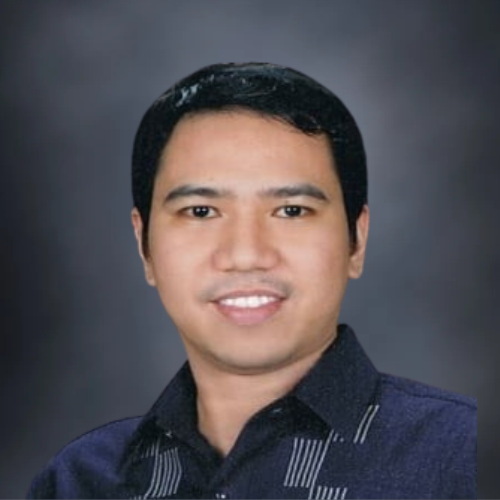
Research Dean
Asian Institute of Maritime Studies, Philippines
Associate Editor
Social Science Lens
Leadership and Organizational Development, Business Administration and Management, Human Resource Development and Workforce Training, Strategic Planning and Organizational Performance, Entrepreneurship and Innovation in Education, Educational Psychology
Want to know the editor profile?
Want to reach out?


Lecturer
Acknowledge Education, Sydney, Australia
Associate Editor
Social Science Lens
Community development and social services, Education and training in higher education, Aged care services and disability support, Maritime welfare and seafarer well-being, Curriculum development and assessment design, Stakeholder engagement and outreach coordination
Want to know the editor profile?
Want to reach out?
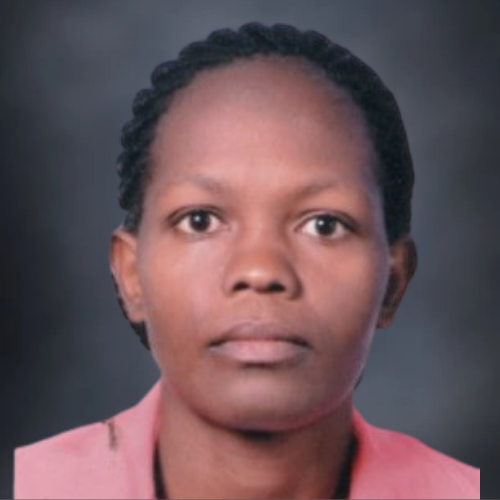

Community and Social Services Coordinator & Lecturer
Southern Cross Higher Education Institute, North Melbourne, Australia
Associate Editor
Social Science Lens
Community and social services education, Adoption services and child safeguarding, Curriculum alignment and faculty mentoring, Work placement coordination and assessment, Counseling and family support services, Policy implementation and compliance in social welfare
Want to know the editor profile?
Want to reach out?
In scholarly publishing, indexing, aggregating, cataloguing, and archiving are critical pillars that ensure a journal’s content is discoverable, accessible, and preserved for future generations. Indexing enhances the visibility of articles in global databases, aggregating consolidates research across platforms, cataloguing integrates journal holdings into institutional libraries, and archiving safeguards scholarly output in trusted repositories.
As a promising publication in the field of social sciences, Social Science Lens is dedicated to achieving recognition and accessibility through inclusion in leading indexing bodies and repositories. This commitment reflects the journal’s vision to serve as a trusted platform for scholars, researchers, and practitioners across diverse disciplines. By fostering rigorous scholarship and timely dissemination, Social Science Lens aspires to strengthen its role in advancing knowledge, encouraging dialogue, and supporting the global academic community in addressing contemporary social challenges.
Indexed by
Catalogued by
Aggregated by
Archived in
Through partnerships with indexing services (Crossref), aggregators (Scilit, Semantic Scholar, Scispace, Mendeley), cataloguers (UC Berkeley, UCLA, Harvard HOLLIS), and archiving repositories (Internet Archive), Social Science Lens guarantees that its publications are discoverable, accessible, and preserved. This multi-layered approach strengthens SSL’s role as a reliable and enduring resource in the advancement of education and pedagogy.
Author Appeals
In cases where an article is yet to be indexed, aggregated, catalogued, or archived, authors are encouraged to contact the Executive Editor and make an appeal. A window of 4 to 6 weeks should be allowed for the processing of such appeals and for receiving a formal response. Social Science Lens assures that all appeals forwarded will be addressed accordingly, ensuring transparency and accountability in the journal’s dissemination process.
Contact: Executive Editor – vmcajala@digi-journalphils.com