Menu
Education in the Philippines has long been guided by national commitments to quality, accessibility, and dignity in scholarly life. Philippine Republic Act No. 7722 (Higher Education Act of 1994), particularly Section 2, affirms the right of all citizens to affordable quality education, ensures academic freedom for intellectual growth and cultural enrichment, and mandates higher education institutions to exemplify pride in scholarship. These ideals provide the very foundation of Pedagogy Review (PR) journal, a peer‑reviewed, open access, trimestral journal of education. It seeks to disseminate Filipino scholarship on a global scale, advancing teaching and learning in ways that reflect national priorities while remaining deeply rooted in local realities. More so, PR aims to resonate findings that exemplify the mandate of CHED Memorandum Order No. 02 (2019), which calls on Filipino teachers to excel in teaching through efficient, evidence‑based approaches and strategies.
Initially conceptualized as an international journal of educational theories and strategies, Pedagogy Review (PR) has shifted its focus towards a more localized perspective, centering on the Philippine educational landscape. While it welcomes authorships from neighboring ASEAN regions, this transition reflects a deliberate commitment to situating pedagogy within the realities of Filipino classrooms and communities, while still engaging with broader academic discourse. In this way, PR embodies the balance between global awareness and local grounding, ensuring that its scholarship remains both relevant and transformative. To achieve this mission, PR accepts a wide range of scholarly contributions, including original research articles, systematic or literature reviews, mini reviews, theoretical or conceptual articles, methodological papers, policy briefs, and case reports or studies. This methodological scope ensures that the journal captures diverse perspectives on pedagogy and education, from empirical investigations to conceptual innovations and policy applications. By publishing such works, PR contributes to the academic community by advancing knowledge, refining practice, and informing policy in education. Its readership includes educators, researchers, policymakers, and practitioners who seek rigorous yet accessible scholarship that bridges theory and practice. Through this mission, the journal fosters dialogue among these stakeholders, contributing to the transformation of Philippine education while resonating with broader pedagogical challenges.
The journal’s scope encompasses diverse areas of pedagogy and education:
Ready to submit? Click the button below.
Need more help before you submit?
The Pedagogy Review Editorial Board is composed of distinguished specialists in the field of education whose expertise spans pedagogy, indigenous education, language teaching and assessment, and educational management. This diverse composition of reviewers ensures the rigor necessary to evaluate and curate each submitted article, guiding manuscripts through a scholarly process that upholds academic integrity and quality. By applying their disciplinary knowledge and critical insights, the board safeguards the journal’s mission to achieve a high level of scholarship, with the further aim of advancing each paper toward successful publication.
Interested to be a part of the board?

Assistant Professor V
St. Paul University Manila, Philippines
Editor-in-Chief
Pedagogy Review
Educational Management, Faculty Evaluation, Curriculum Alignment, Outcome-Based Education, Research Methods, Statistics, Research Ethics, Personality Theories, Counselling
Want to know the editor profile?
Want to reach out?


Associate Professor
Victoria University, Melbourne, Australia
Associate Editor
Pedagogy Review
Communication for development; Applied linguistics; Human global mobility and diaspora studies; Discourse analysis in development and education; Network analysis of emerging communities; Program evaluation (World Bank-funded initiatives, IEC functions);
Problem-based learning (PBL) and language integration in curriculum
Want to know the editor profile?
Want to reach out?
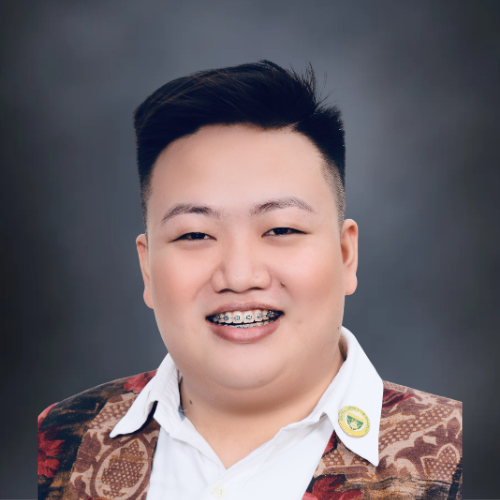

Assistant Professor III
Central Luzon State University, Philippines
Associate Editor
Pedagogy Review
English Language Education, Technology in Language Teaching, Teacher Internationalization, Literary Criticism, Developmental Reading, Oral Communication, Campus Journalism
Want to know the editor profile?
Want to reach out?

Assistant Professor I
Central Luzon State University, Philippines
Associate Editor
Pedagogy Review
Mathematics Pedagogy, Indigenous Education, STEM Education, Teacher Efficiency & Efficacy, Operation of Fractions, Teaching Performance, Financial Management
Want to know the editor profile?
Want to reach out?

Assistant Professor II, Asian Institute of Maritime Studies, Philippines
Lecturer, Mapua University, Philippines
Associate Editor
Pedagogy Review
Educational Management, English and Literature Education, Purposive Communication, Social Science, Humanities
Want to know the editor profile?
Want to reach out?

Assistant Professor II, Asian Institute of Maritime Studies, Philippines
Assistant Professor I, Mapua University, Philippines
Associate Editor
Pedagogy Review
English Language Teaching, Language Assessment, Communication Arts, Purposive Communication
Want to know the editor profile?
Want to reach out?

Master Teacher II
Araullo High School, Philippines
Associate Editor
Pedagogy Review
Mathematics Education, Quantitative Data Analysis, Applied Pedagogy
Want to know the editor profile?
Want to reach out?
In scholarly publishing, indexing, aggregating, cataloguing, and archiving are critical pillars that ensure a journal’s content is discoverable, accessible, and preserved for future generations. Indexing enhances the visibility of articles in global databases, aggregating consolidates research across platforms, cataloguing integrates journal holdings into institutional libraries, and archiving safeguards scholarly output in trusted repositories.
As a promising publication in the field of education and pedagogy, Pedagogy Review (PR) is committed to achieving recognition and accessibility by being included in leading indexing bodies and repositories. This commitment reflects our vision to serve as a trusted platform for educators, researchers, and practitioners worldwide.
Indexed by
Catalogued by
Aggregated by
Archived in
Through partnerships with indexing services (Crossref), aggregators (Scilit, Semantic Scholar), cataloguers (UC Berkeley, UCLA, Harvard HOLLIS), and archiving repositories (Internet Archive), Pedagogy Review (PR) guarantees that its publications are discoverable, accessible, and preserved. This multi-layered approach strengthens PR’s role as a reliable and enduring resource in the advancement of education and pedagogy.
Author Appeals
In cases where an article is yet to be indexed, aggregated, catalogued, or archived, authors are encouraged to contact the Executive Editor and make an appeal. A window of 4 to 6 weeks should be allowed for the processing of such appeals and for receiving a formal response. Pedagogy Review (PR) assures that all appeals forwarded will be addressed accordingly, ensuring transparency and accountability in the journal’s dissemination process.
Contact: Executive Editor – vmcajala@digi-journalphils.com