
Menu
Ocean Life is a biannual, peer‑reviewed, open access journal dedicated to advancing scholarship on maritime occupations, seafaring practices, and sea security. Its mission is grounded in the recognition that the Philippines, as an archipelagic nation, relies on both the lived experiences of its seafarers and the strength of its maritime governance. This commitment is reinforced by key legislative measures: Republic Act No. 10635 (2014), which empowers the Maritime Industry Authority (MARINA) to implement the Standards of Training, Certification, and Watchkeeping (STCW) for Filipino seafarers; Republic Act No. 9522 (2009), which defines the country’s baselines in accordance with UNCLOS to secure maritime zones; Executive Order No. 57 (2011, strengthened in 2024), which established the National Coast Watch System for coordinated domain awareness; and Republic Act No. 10668 (2015), which modernized maritime trade through foreign ships co‑loading while mandating vigilance against smuggling. These laws provide the institutional grounding for the journal’s role in linking research with occupational safety, maritime governance, and national security.
The journal highlights the intersection of seafaring practice, occupational safety, and maritime governance. It invites contributions that examine training systems, policy frameworks, maritime domain awareness, and the lived realities of seafarers within Philippine and regional contexts. Its methodological scope encompasses original research articles, literature reviews, policy briefs, theoretical or conceptual papers, and convention papers, enabling a wide range of scholarly outputs from empirical studies to conceptual and policy‑driven analyses. As an academic platform, Ocean Life contributes by linking research to practice, advancing occupational standards, informing governance, and reinforcing sea security. Its readership includes seafarers, maritime professionals, maritime educators, policymakers, and industry leaders who seek laborious yet reachable scholarship that bridges law, practice, and security imperatives. It also welcomes international submissions, though, the journal places Philippine maritime contexts at the center of its inquiry.
The journal encompasses a wide range of scholarly and applied studies that reflect the realities of maritime work, safety, and domain protection, while opening space for emerging areas of inquiry.
Ready to submit? Click the button below.
Need more help before you submit?
The editorial board of Ocean Life unites professionals whose expertise bridges maritime practice, academic leadership, community services, and scholarly publishing. Their collective backgrounds encompass decades of international seafaring, higher education management, research mentorship, and training in global standards. With strengths in curriculum design, peer review, communication, and welfare advocacy, the board ensures that submissions are evaluated with both technical precision and human-centered insight. Guided by a commitment to advancing maritime knowledge and fostering educational innovation, the board curates works that highlight the evolving challenges and opportunities of life at sea, reinforcing OL’s mission to promote resilient, ethical, and transformative scholarship in the maritime field.
Interested to be a part of the board?


Former Research Dean, Asian Institute of Maritime Studies, Philippines
Doctoral Researcher, Innovative Information Technology Solutions, Philippines
Editor-in-Chief
Ocean Life
Maritime Research, Research Productivity, Communication Barriers & Competence, Instructional Delivery, Maritime Education, Tracer Studies, Teaching Methodologies, Media, Communication Theories
Want to know the editor profile?
Want to reach out?


Lecturer
Acknowledge Education, Sydney, Australia
Associate Editor
Social Science Lens
Community development and social services, Education and training in higher education, Aged care services and disability support, Maritime welfare and seafarer well-being, Curriculum development and assessment design, Stakeholder engagement and outreach coordination
Want to know the editor profile?
Want to reach out?
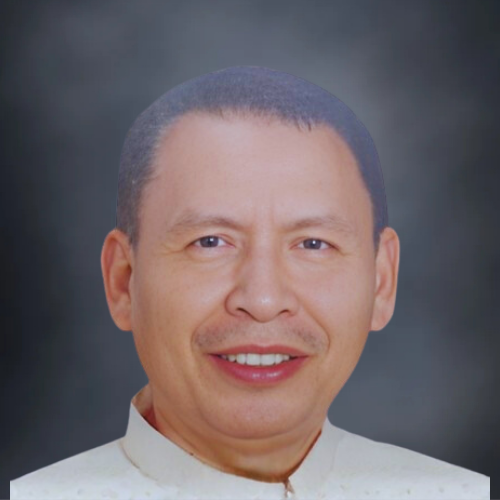

Instructor I/Onboard Training Supervisor
Jose Rizal Memorial State University, Philippines
Associate Editor
Ocean Life
Maritime education and training, Marine transportation and seamanship, Shipboard operations and navigation management, Academic program leadership and curriculum delivery, Onboard training supervision and student mentorship, Compliance with MARINA and IMO international standards, Safety management and risk assessment in maritime practice
Want to know the editor profile?
Want to reach out?
In scholarly publishing, indexing, aggregating, cataloguing, and archiving are critical pillars that ensure a journal’s content is discoverable, accessible, and preserved for future generations. Indexing enhances the visibility of articles in global databases, aggregating consolidates research across platforms, cataloguing integrates journal holdings into institutional libraries, and archiving safeguards scholarly output in trusted repositories.
As a promising publication in the field of social sciences, Ocean Life is dedicated to achieving recognition and accessibility through inclusion in leading indexing bodies and repositories. This commitment reflects the journal’s vision to serve as a trusted platform for scholars, researchers, and practitioners across diverse disciplines. By fostering rigorous scholarship and timely dissemination, Ocean Life aspires to strengthen its role in advancing knowledge, encouraging dialogue, and supporting the global academic community in addressing contemporary social challenges.
Indexed by
Catalogued by
Aggregated by
Archived in
Through partnerships with indexing services (Crossref), aggregators (Scilit, Semantic Scholar, Scispace, Mendeley), cataloguers (UC Berkeley, UCLA, Harvard HOLLIS), and archiving repositories (Internet Archive), Ocean Life guarantees that its publications are discoverable, accessible, and preserved. This multi-layered approach strengthens OL’s role as a reliable and enduring resource in the advancement of education and pedagogy.
Author Appeals
In cases where an article is yet to be indexed, aggregated, catalogued, or archived, authors are encouraged to contact the Executive Editor and make an appeal. A window of 4 to 6 weeks should be allowed for the processing of such appeals and for receiving a formal response. Ocean Life assures that all appeals forwarded will be addressed accordingly, ensuring transparency and accountability in the journal’s dissemination process.
Contact: Executive Editor – vmcajala@digi-journalphils.com