Menu
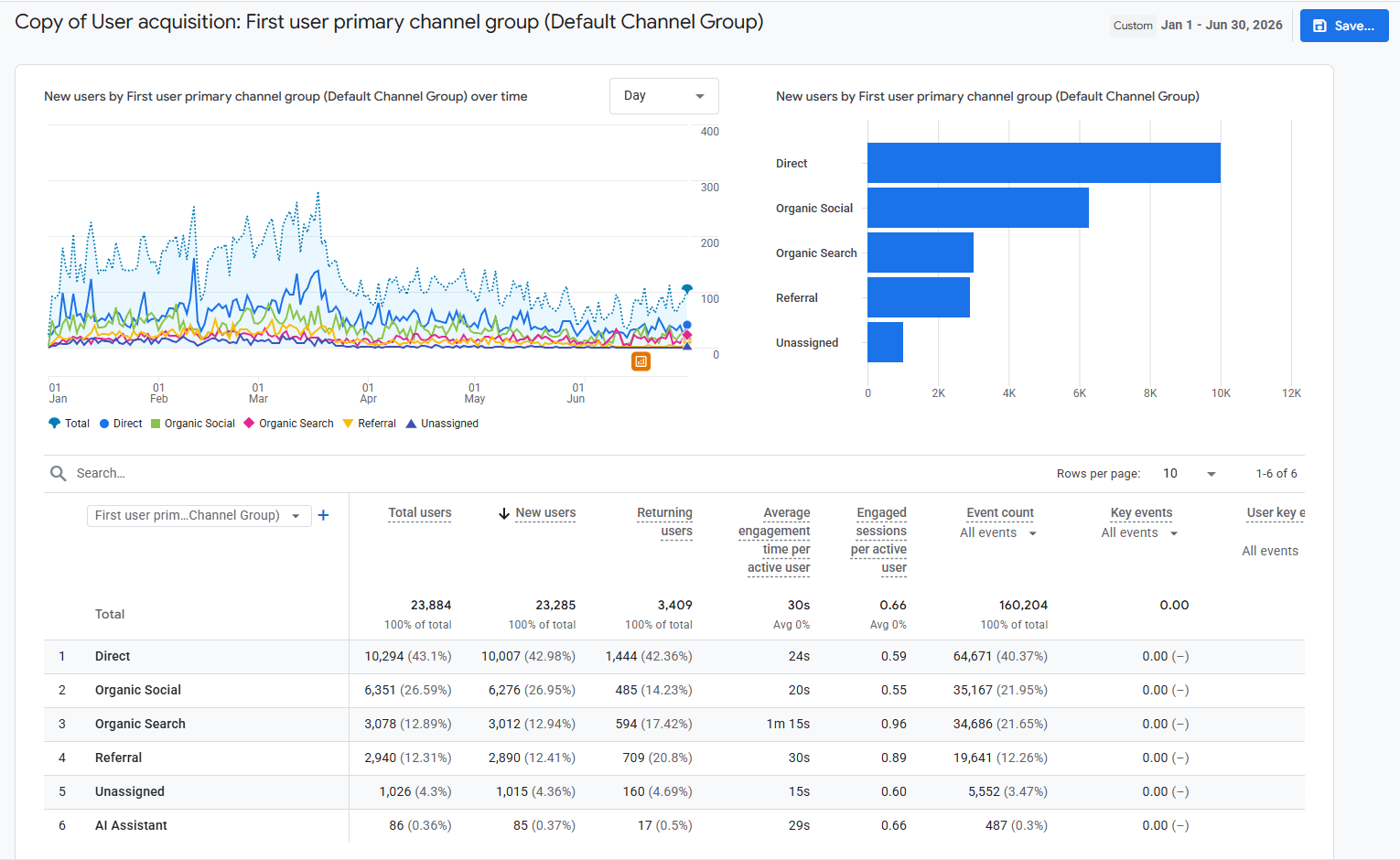
Figure 1 – First user
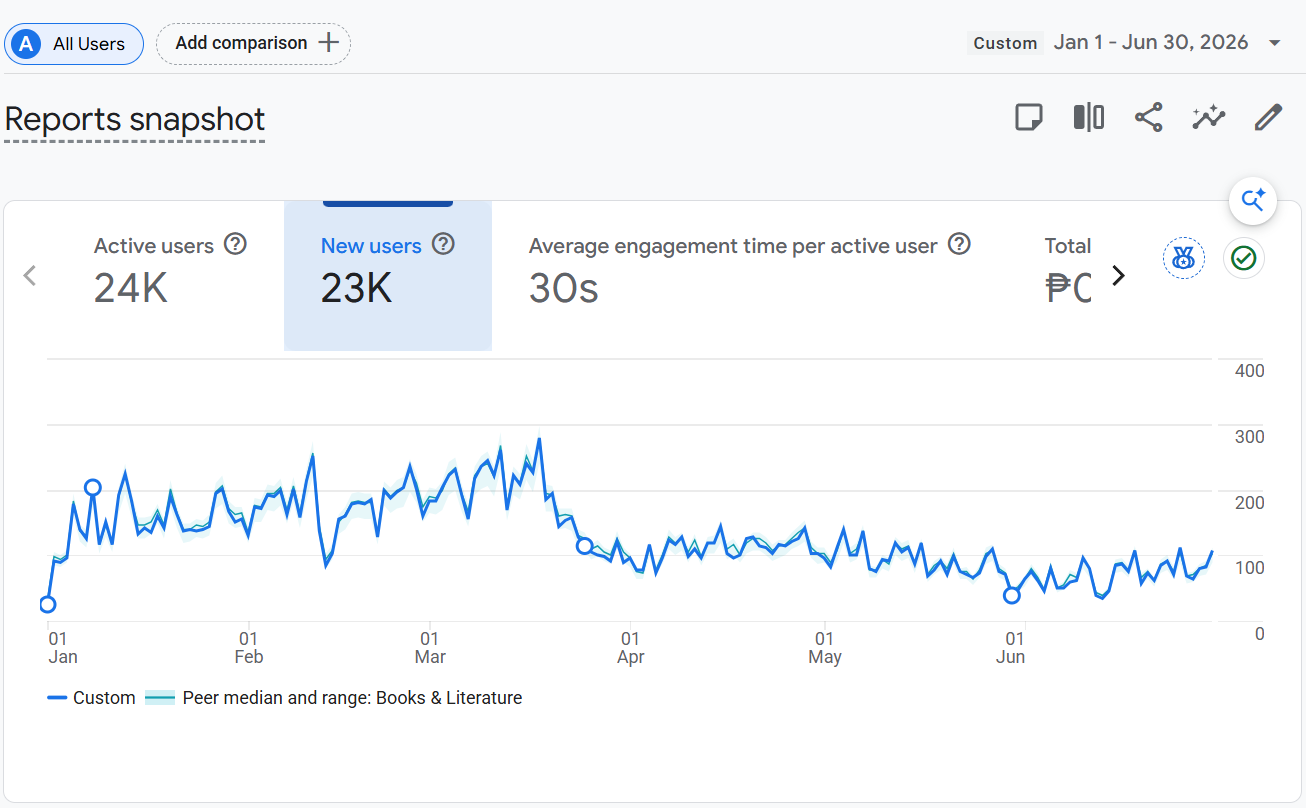
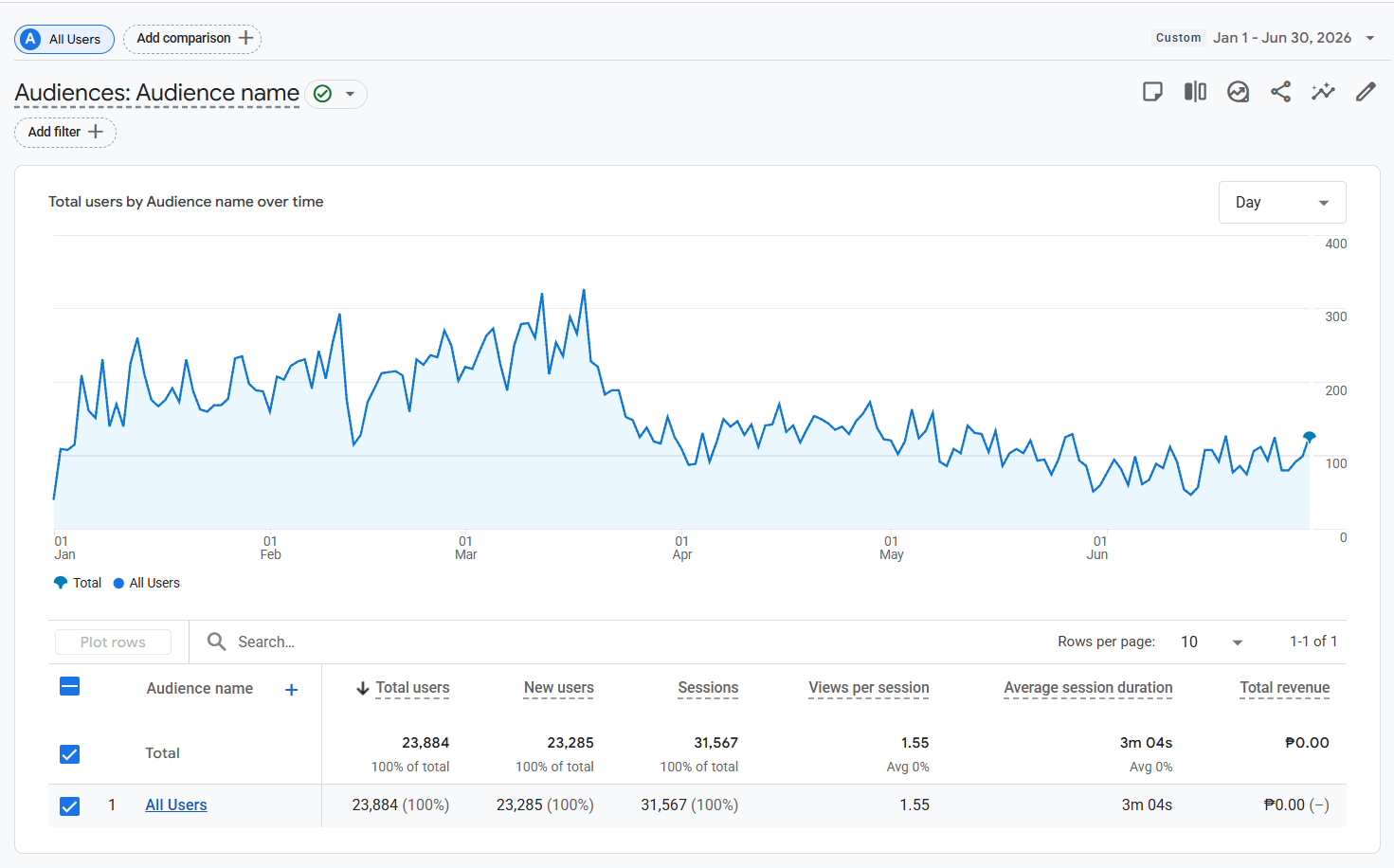
Makati City, Philippines – Digital Journal Philippines (DJP) recorded a strong digital performance during the first half of 2026, demonstrating sustained audience growth, broad user reach, and meaningful engagement across its online platforms. Based on Google Analytics data covering the period from January 1 to June 30, 2026, the organization attracted 23,854 total users and 23,285 new users, reflecting its continuing ability to draw first-time visitors and expand its readership base (Tables 1, 2, 3, and 4). The platform generated 31,567 sessions and maintained a consistent flow of traffic throughout the reporting period, affirming the effectiveness of its content dissemination strategies and online visibility efforts.
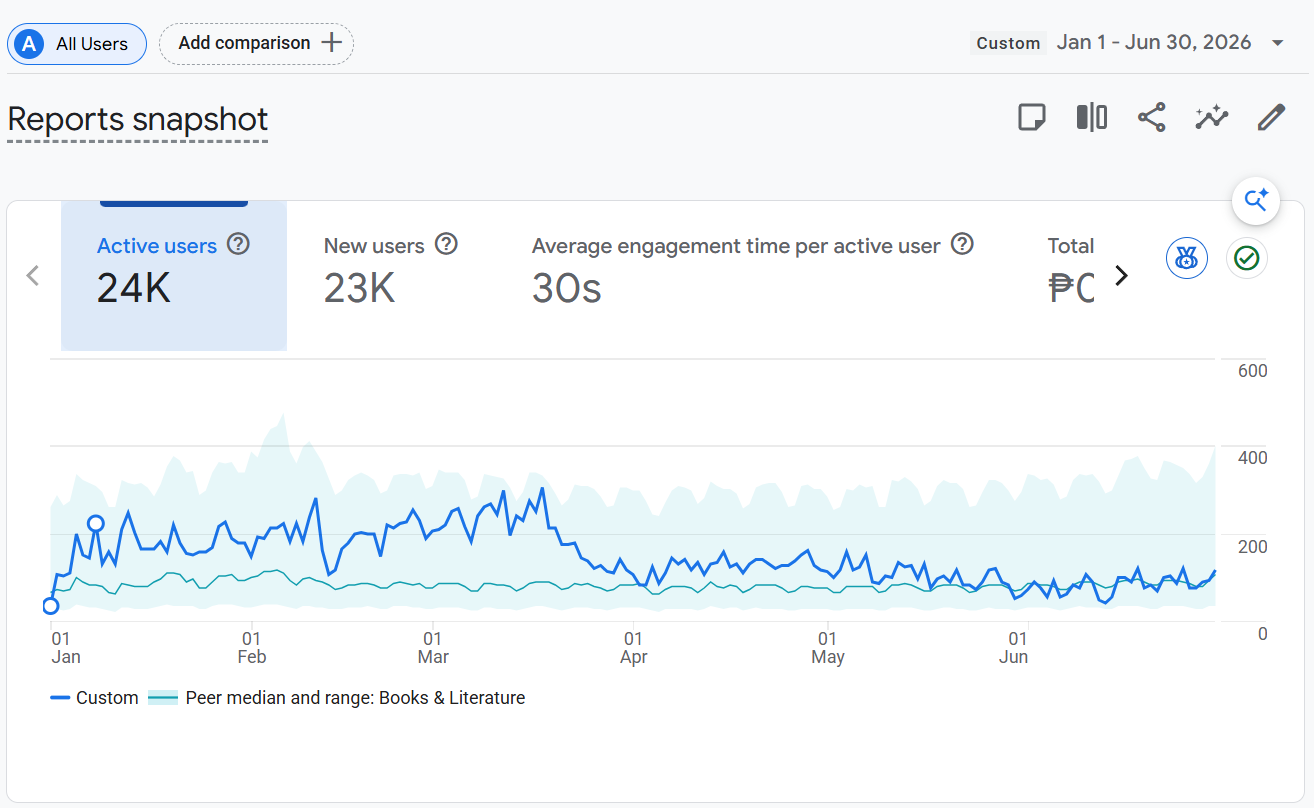
Figure 2 – Active users
Figure 3 – New users
Figure 4 – Audiences
A closer examination of user acquisition channels reveals that Direct Traffic emerged as the dominant source of new users, contributing more than 10,700 new users, while Organic Social and Organic Search generated approximately 6,276 and 2,912 new users, respectively (Table 1). These figures highlight the growing recognition of the Digital Journal Philippines brand and the effectiveness of its search engine optimization and social media outreach initiatives. The strong contribution from organic channels indicates that audiences are actively discovering and accessing the platform without reliance on paid advertising campaigns, reflecting both brand credibility and content relevance. The acquisition profile demonstrates a healthy balance between direct audience loyalty and organic discoverability, two critical indicators of digital sustainability and long-term growth.
Audience engagement indicators likewise presented encouraging results. The website registered approximately 24,000 active users and maintained an average engagement time of 30 seconds per active user (Tables 2 and 6). While engagement patterns varied throughout the six-month period, activity remained consistently above industry peer benchmarks indicated in the analytics reports. Furthermore, audience analytics showed that users interacted with content from multiple geographic locations, with the Philippines accounting for the largest share of visitors, followed by audiences from the United States and other international locations (Table 5). This geographic distribution demonstrates the platform’s capacity to reach both domestic and global audiences, thereby enhancing its visibility as an emerging digital publication serving diverse readership communities.
Figure 5 – User demographic details
Content performance data further underscored the strength of the publication’s editorial offerings. Analytics on landing pages, pages and screens, and user interactions indicate that visitors actively consumed articles focused on academic research, higher education, innovation, digital transformation, and public policy issues (Tables 7, 9, and 10). Several articles attracted substantial page views and engagement, demonstrating strong reader interest in evidence-based reporting and scholarly discourse. User activity generated over 140,000 recorded events, including page views, session starts, and user engagement actions, signifying extensive interaction with website content and functionality (Table 10). These engagement metrics reflect not only audience reach but also the ability of the platform to sustain reader attention across multiple content categories.
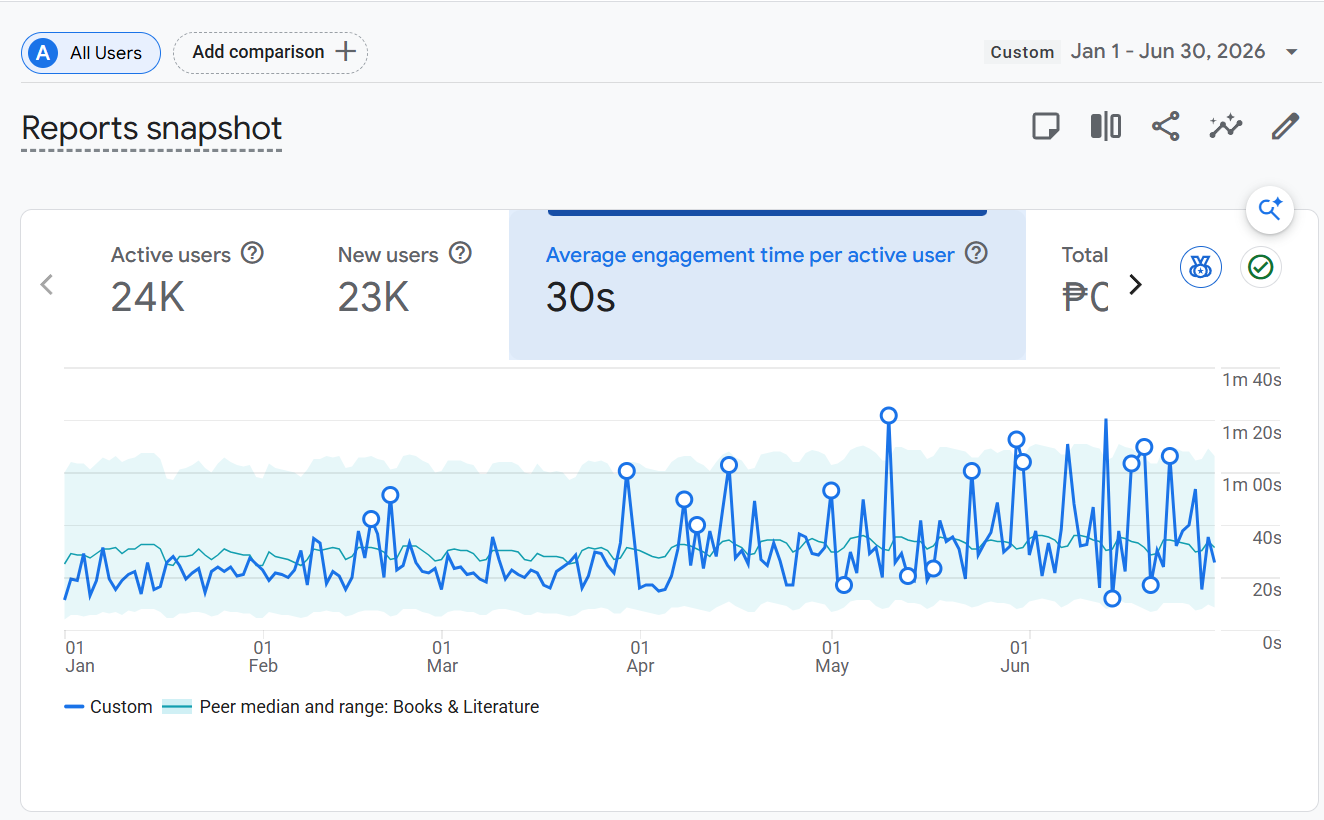
Figure 6 – Average engagement
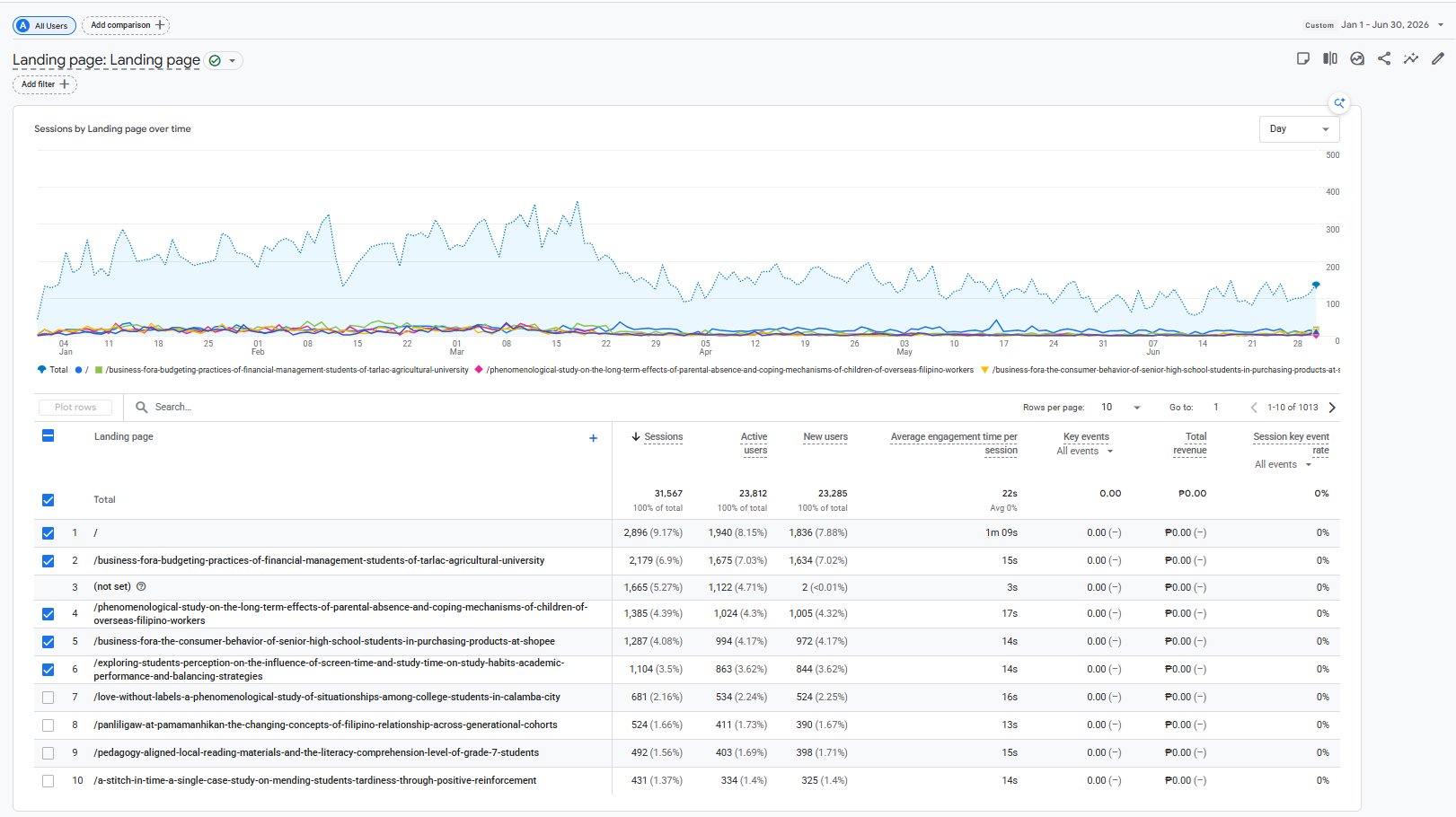
Figure 7 – Landing page
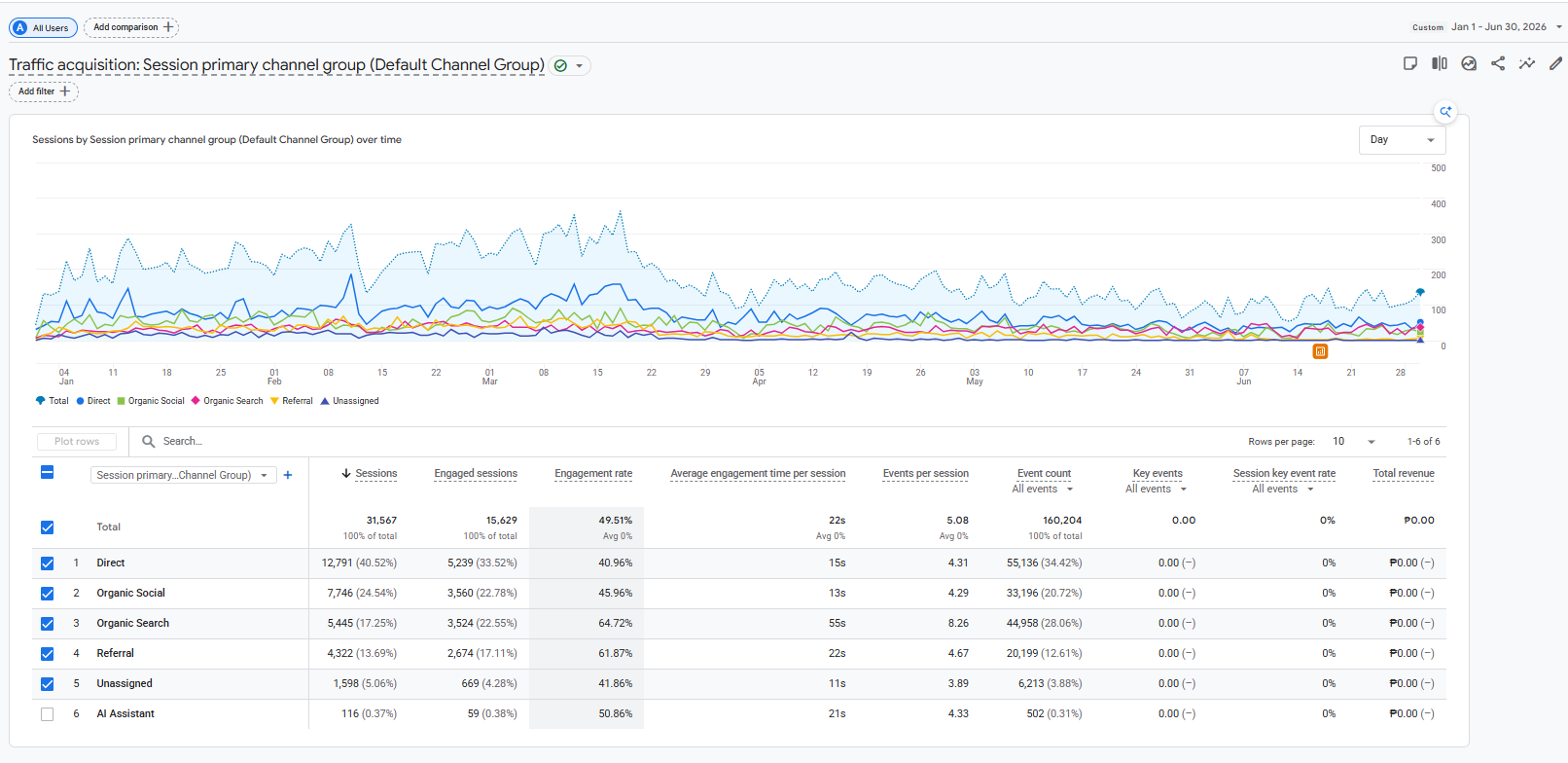
Figure 8 – Traffic acquisition
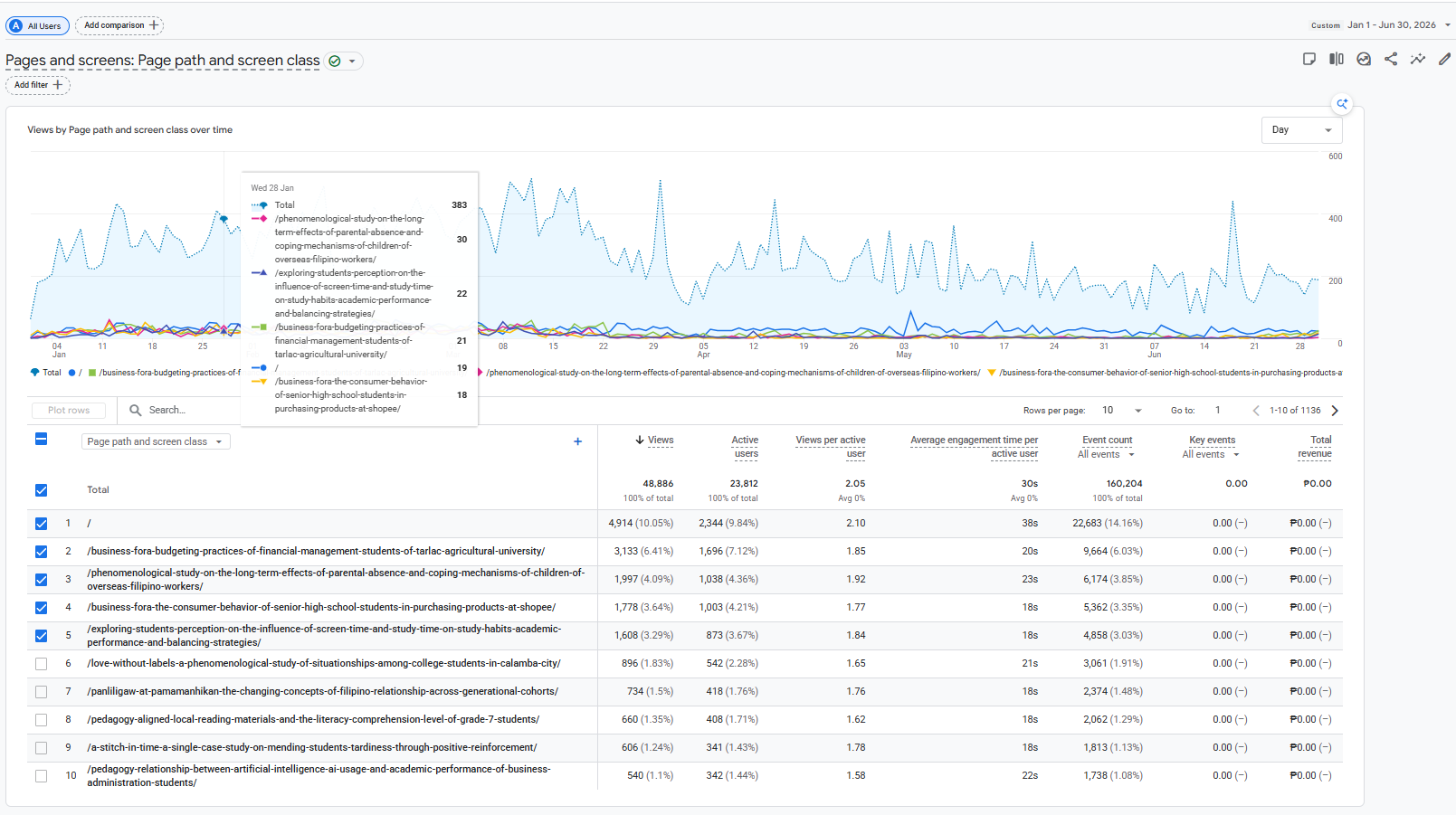
Figure 9 – Pages and screens
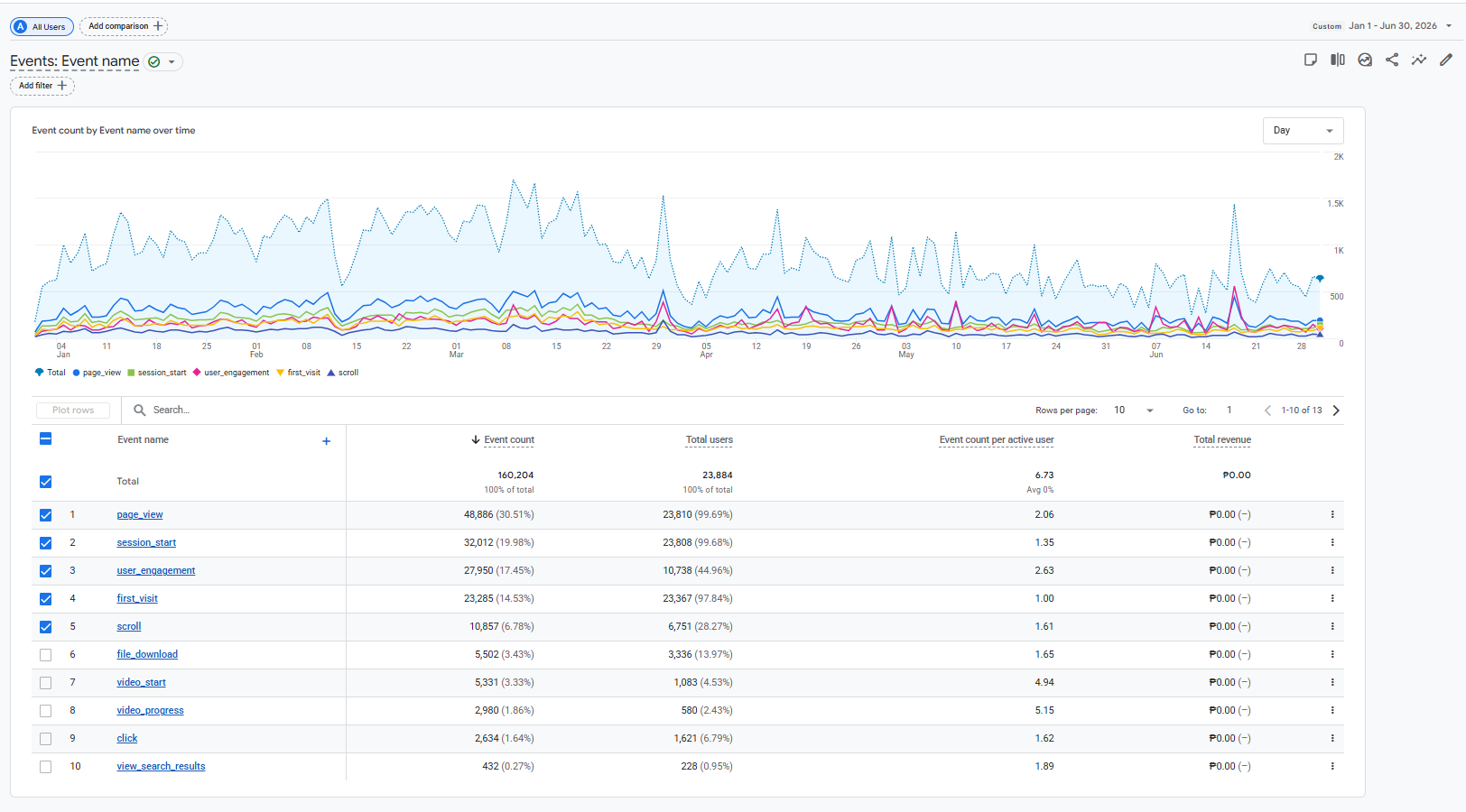
Figure 10 – Website events
Overall, the first-half performance of Digital Journal Philippines demonstrates a positive trajectory characterized by strong audience acquisition, sustained user activity, broad geographic reach, and substantial content interaction. The combination of more than 23,000 new users, nearly 24,000 active users, over 31,000 sessions, and more than 140,000 recorded engagement events reflects a growing and increasingly visible digital publication. The results suggest that Digital Journal Philippines has successfully strengthened its online presence, expanded its readership network, and enhanced public engagement with its content. As the organization continues to advance its publishing and communication initiatives, these performance indicators provide a solid foundation for future growth, partnership development, and increased influence within the digital media and scholarly communication landscape.