Menu
Digital Journal Philippines Reaffirms Its Commitment to Quality, Integrity, and International Visibility in Scholarly Publishing
Makati City, Philippines – The landscape of higher education and research publication in the Philippines continues to evolve following the issuance of the Enhanced Implementing Guidelines of DBM-CHED Joint Circular No. 3 (JC3) on May 18, 2026. The enhanced guidelines place greater emphasis on research quality, publication integrity, international visibility, authorship accountability, and evidence-based scholarly outputs that support faculty development, professorial accreditation, and institutional excellence.
In response to these developments, Digital Journal Philippines (DJP) respectfully reaffirms its commitment to supporting Filipino researchers, faculty members, graduate students, academic institutions, government agencies, and development organizations through publishing systems and practices that seek to align with the evolving standards of scholarly communication in the country.
While JC3 primarily governs faculty reclassification and accreditation in State Universities and Colleges (SUCs), its implications extend into the broader research publishing ecosystem. The enhanced guidelines signal a clear direction toward stronger peer review mechanisms, international publication standards, transparent authorship practices, and greater emphasis on research outputs that can withstand national and global evaluations.
As a research publication platform operating within this evolving environment, DJP recognizes the responsibility of publishers not only to disseminate research but also to contribute to the development of a credible, ethical, and globally competitive scholarly ecosystem.
Enhanced JC3 Raises the Bar for Research Quality and Academic Recognition
The Enhanced JC3 Guidelines represent a significant milestone in Philippine higher education. Beyond faculty promotion and accreditation, the policy encourages a culture of rigorous scholarship, accountability, and international engagement.
The guidelines underscore several critical areas:
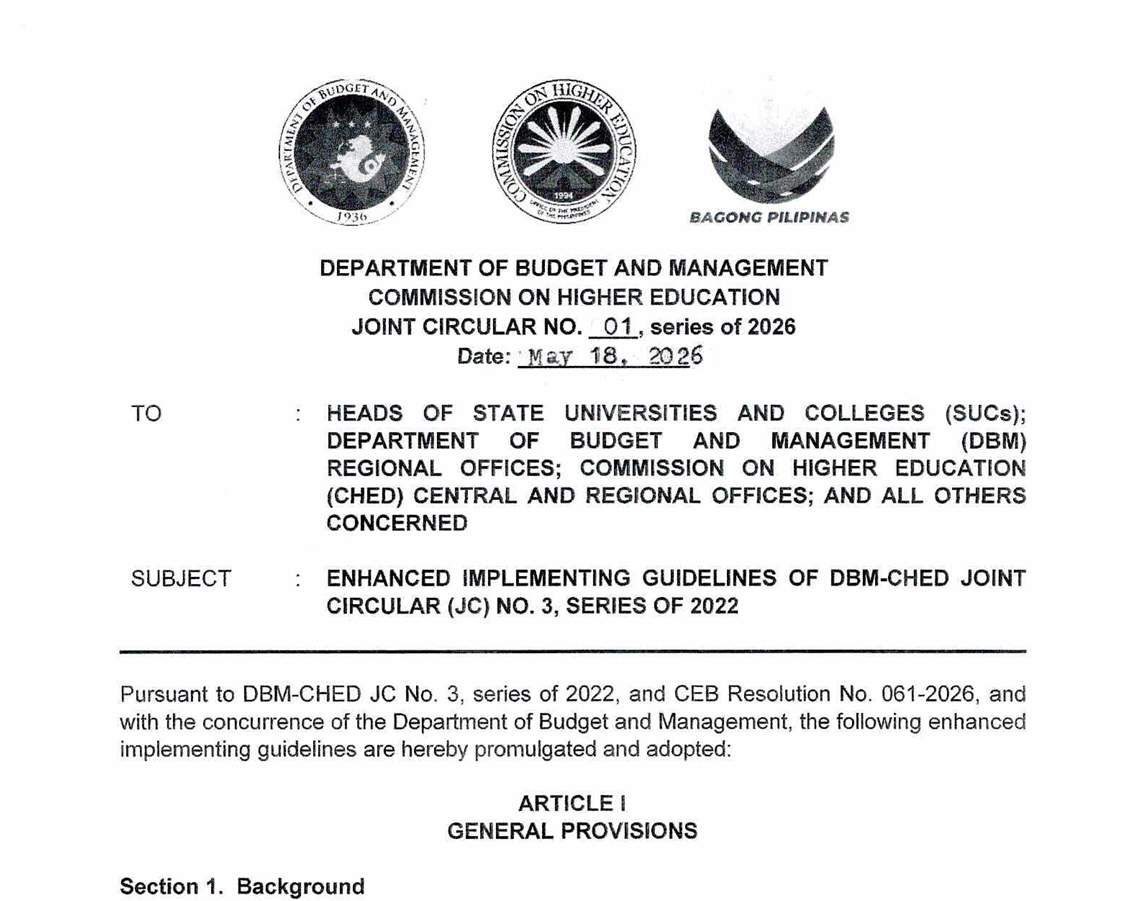
Enhanced JC3 and the Future of Philippine Scholarly Publishing
For many faculty members, research publications now serve not only as platforms for knowledge dissemination but also as evidence of scholarly productivity, expertise, and contribution to society. Recognizing these developments, DJP has taken deliberate steps over the years to strengthen its publication framework in ways that resonate with these emerging expectations.
Areas Where DJP Already Meets Key JC3 Expectations
Long before the release of the Enhanced JC3 Guidelines, several elements now emphasized by the policy had already been incorporated into DJP’s publishing framework. These initiatives may not have been originally designed to comply specifically with JC3, but they demonstrate a shared commitment to research quality, accountability, and responsible scholarly communication. According to the publicly available information from the DJP platform, its publication system has established mechanisms that support quality assurance and adherence to publication standards.
These principles are increasingly important under the Enhanced JC3 framework, which places stronger attention on accountability and ethical scholarship.
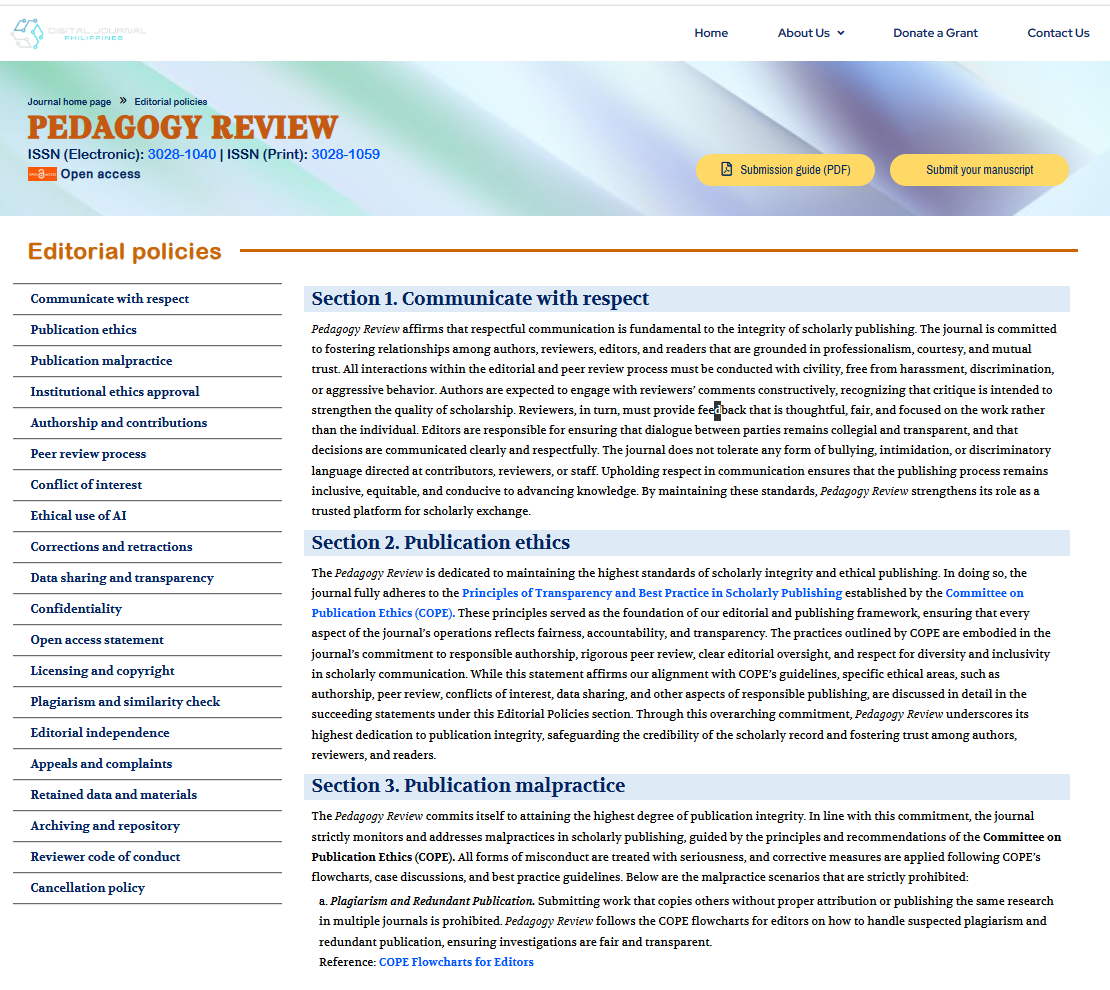
Editorial Policies of Digital Journal Philippines
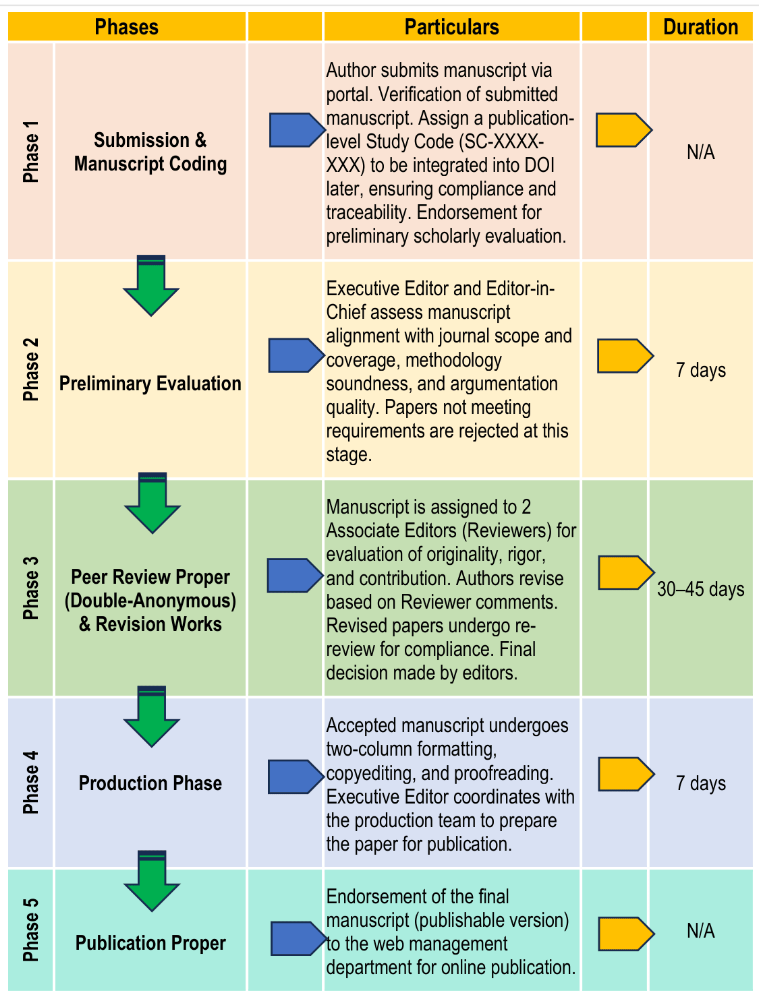
DJP Publication Workflow
Alignment Between Enhanced JC3 Expectations and DJP Initiatives
The table below illustrates how existing DJP initiatives correspond with major themes emphasized by the Enhanced JC3 Guidelines.
| Enhanced JC3 Priority Area | DJP Alignment |
| Peer-reviewed publication | Established peer-review mechanisms |
| Research integrity | Editorial screening and originality expectations |
| Authorship accountability | Co-author disclosure practices |
| Publication quality | Structured editorial evaluation |
| Research dissemination | Open-access digital publishing |
| Documentation & transparency | Publication records and submission guidelines |
| International standards | Manuscript alignment with international publication standards |
| Research visibility | Ongoing international indexing and visibility initiatives |
This alignment reflects not a claim of perfect compliance, but an ongoing institutional effort to continuously strengthen publication systems in accordance with national and international best practices.
DJP Pursues Global Indexing and Recognition
In a major step toward internationalization, Digital Journal Philippines (DJP) formally submitted applications last July and August 2026 for evaluation to several internationally recognized indexing and abstracting databases. Specifically, the following DJP scholarly journals were endorsed for evaluation: Pedagogy Review, Social Science Lens, Business Fora, and Technologique. Currently, these journals are undergoing their respective review and evaluation processes. The submissions represent an important milestone in the organization’s continuing effort to strengthen the international visibility, discoverability, and credibility of Philippine research while aligning its publishing ecosystem with globally recognized standards of scholarly communication.
DJP recognizes that acceptance into these indexing systems is subject to rigorous evaluation and independent review processes. As such, the organization remains respectful of the assessment procedures undertaken by these indexing bodies. Nevertheless, the submission itself reflects a strategic commitment of DJP to continuous improvement and adherence to globally recognized publishing benchmarks. The pursuit of indexing is intended to contribute to greater international visibility of Philippine research, increased discoverability of scholarly outputs, enhanced citation opportunities, stronger global research engagement, expanded reach for Filipino authors and institutions, and alignment with emerging scholarly expectations reflected in the Enhanced JC3 framework. Rather than viewing indexing as an institutional achievement alone, DJP views it as an opportunity to elevate the visibility of Filipino scholarship within the international academic community.
Statement from the DJP Leadership
Reflecting on the publication industry’s evolving role under the Enhanced JC3 environment, the leadership of Digital Journal Philippines, through its Founder, President and Chief Executive Officer, Dr. Victor M. Cajala, emphasized that scholarly publishers share a collective responsibility in advancing research quality and visibility:
“The Enhanced JC3 Guidelines provide a meaningful direction toward research excellence, accountability, integrity, and international visibility. Digital Journal Philippines welcomes this direction and remains committed to supporting researchers and institutions through ethical, transparent, and continuously improving publication practices. While much work remains ahead, DJP will continue investing in systems and initiatives that help strengthen the global presence of Philippine scholarship.”
The organization further underscored that scholarly publishing is most effective when it operates not merely as a publication service but as a partner in knowledge creation, dissemination, and societal development.
Moving Forward
As Philippine higher education continues its pursuit of global competitiveness, Digital Journal Philippines remains committed to continuously improving its publishing ecosystem through stronger editorial governance, enhanced publication ethics mechanisms, improved authorship accountability systems, increased research visibility initiatives, international quality benchmarking, open-access knowledge dissemination, collaboration with higher education institutions, and continuous alignment with evolving national and international publication standards. The organization recognizes that excellence in scholarly publishing is an ongoing journey rather than a one-time accomplishment.
For this reason, every policy enhancement, editorial improvement, indexing initiative, and quality assurance mechanism is viewed not merely as compliance, but as a contribution toward strengthening Philippine research and ensuring that Filipino scholarship earns the visibility and recognition it deserves.